Find the leak. Understand the repair.
A water-loss problem deserves a diagnosis
Frequent refilling, a dropping waterline or persistent wet areas near pool plumbing can justify a closer look. Evaporation, splash-out and equipment operation also affect water level. Describe what changes, when it happens and whether the pump is running; one symptom alone does not locate a leak.
Testing matched to your pool
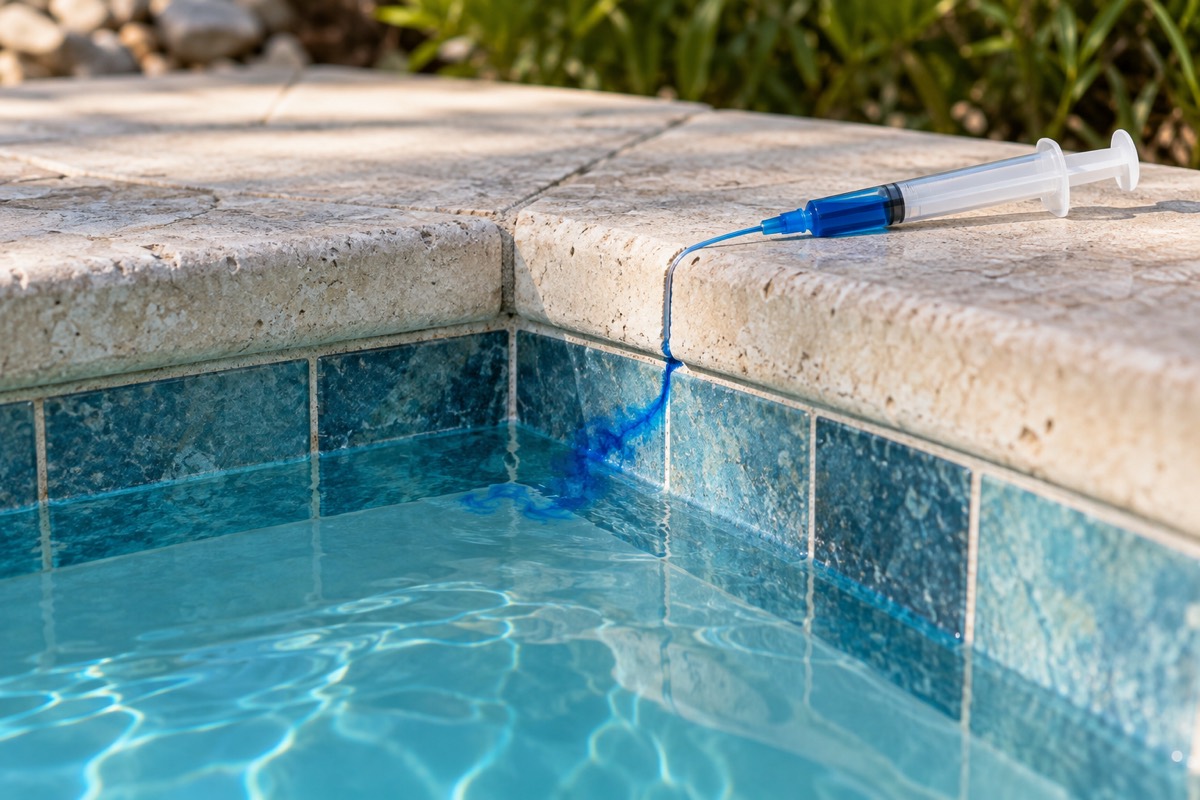
Ask the provider whether the assessment covers the pool shell, skimmers, fittings, equipment and underground lines. Depending on the suspected source, a specialist may use dye testing, pressure testing or listening equipment. Confirm what is included, what is excluded and whether a written findings report is supplied.
Detection and repair are separate decisions
A diagnostic visit may carry a fee even when repair is not completed that day. Before booking, ask whether the company performs repairs, whether the testing fee is credited toward work, and how concealed plumbing or deck access is handled. Request findings and a repair scope before authorizing excavation.
Questions about pool leak detection
Does a dropping water level always mean a leak?
No. Weather, splash-out and pool operation also affect water level. A comparison test can provide useful information, but a provider must assess the cause.
Can you find leaks under the pool deck?
Qualified specialists may test individual plumbing lines and use locating equipment. Access and the condition of the system affect what can be determined; confirm those capabilities when arranging a visit.